Aspen: The Blackletter Font for Modern Authority
In a digital world saturated with sleek, minimalist sans-serifs and friendly rounded fonts, there is a powerful counter-movement. It’s a return to character, to weight, and to the undeniable presence of history. This is where Aspen enters the conversation. It is not merely a typeface; it is a declaration. As a classic Old English font, Aspen offers a direct line to the grandeur of the past, providing a tool for designers, creators, and brands who want to infuse their work with timeless authority and a touch of regal drama.
Decoding the Aspen Aesthetic
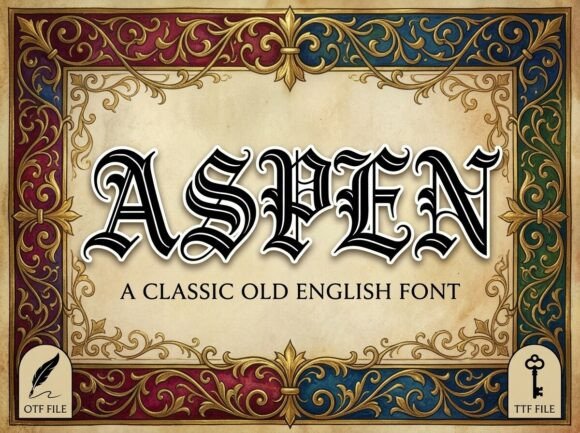
What exactly defines the Aspen font? At its core, it is a blackletter masterpiece, a style rooted in the manuscripts of medieval Europe. Its defining characteristics are sharp, rhythmic vertical strokes that give it a strong, structured backbone. These are complemented by intricate, flared terminals—the ends of the letters that add a subtle, calligraphic flair. This combination creates a typeface that feels both monumental and meticulously crafted. It doesn’t just sit on a page; it commands attention, capturing the royal-manuscript soul of traditional calligraphy in a digital format.
The “blackletter” category can sometimes feel intimidating or overly archaic. However, Aspen’s design balances historical authenticity with a clarity that makes it usable in contemporary contexts. It avoids the excessive ornamentation that can render some Old English fonts illegible, focusing instead on a strong, rhythmic flow. This makes it a versatile asset for projects that need to feel established, trustworthy, and steeped in heritage without sacrificing modern readability at headline sizes.
Practical Applications for Creators and Brands
The true power of Aspen is unlocked when applied to specific creative challenges. Its commanding presence is not for every project, but for the right one, it becomes an indispensable part of the visual identity. Let’s explore where this font can transform a design from ordinary to extraordinary.
For Luxury and Artisanal Branding
Consider the world of high-end spirits. A whiskey, gin, or bourbon label needs to communicate age, tradition, and craftsmanship. Aspen is the premier choice here. Used for the brand name or a key descriptor like “Reserve” or “Single Barrel,” it instantly suggests a legacy of quality. The font’s weight and detail mirror the complexity of the liquid itself, appealing to a discerning consumer who values story and substance. Similarly, for artisanal goods—think small-batch coffee roasters, bespoke leather workshops, or premium chocolatiers—Aspen can anchor the logo, giving a startup the visual credibility of a century-old institution.
In Publishing and Storytelling
The literary world is a natural habitat for this typeface. An independent fantasy novel cover featuring Aspen will immediately signal its genre. It evokes ancient maps, spellbooks, and epic sagas, setting the tone before a single word of the blurb is read. It’s equally effective for historical fiction or gothic narratives. Beyond covers, publishers can use it for chapter headings or drop caps to create a cohesive, immersive reading experience that feels curated and special.
For diplomas and certificates, Aspen replaces generic, overused script fonts with something that carries genuine weight. A university, professional guild, or online course platform using Aspen for its certificates bestows a sense of true achievement and permanence. The recipient receives a document that looks and feels as significant as the accomplishment it represents.
Digital Presence and Social Media
In the fast-paced realm of social media, standing out is critical. The cinematic dark-academia aesthetic, with its themes of classic literature, vintage style, and intellectual pursuit, has a massive following. Aspen is the perfect typographic vehicle for this. A social media header for a bookstagrammer, a study-focused YouTuber, or a boutique stationery brand can use the font to instantly establish a moody, scholarly, and visually distinct brand identity. It works beautifully for title cards in video content or as impactful text overlays on atmospheric photography.
Adapting Aspen for Different Goals and Audiences
Using a font like Aspen effectively requires more than just liking its style. It demands a strategic approach to ensure it communicates the right message to the right audience.
- For the Entrepreneur or Small Business Owner: Your goal is to build trust and perceived value. Use Aspen sparingly and powerfully. A logo lockup, a hero headline on your website, or a watermark on product photography can be enough. Pair it with a clean, neutral sans-serif for body text to ensure your message remains clear and accessible. This contrast makes the Aspen element pop without overwhelming the customer.
- For the Designer or Freelancer: You can offer Aspen as a specialized tool in your toolkit for clients in luxury, heritage, or niche creative markets. Create mockups showing its application on business cards, letterheads, and packaging to demonstrate its potential. Educate your client on why this historical font choice can differentiate their brand in a crowded marketplace.
- For the Educator or Blogger: If your content focuses on history, literature, philosophy, or classic arts, integrating Aspen into your blog graphics, presentation templates, or PDF guides can deepen your audience’s engagement. It visually reinforces your expertise and passion for the subject matter, creating a more immersive experience.
Best Practices for Clarity and Impact
To harness Aspen’s power without falling into cliché, follow these practical guidelines:
- Prioritize Legibility: Use Aspen for headlines, titles, and short phrases. Its intricate details are designed for impact at larger sizes. Avoid using it for long paragraphs of body copy, where its density can hinder reading flow.
- Mind Your Pairing: The most effective designs often use contrast. Pair Aspen with a simple, geometric sans-serif (like Montserrat or Lato) or a classic serif (like Garamond or Baskerville) for body text. This creates a clear visual hierarchy and keeps the overall design balanced and professional.
- Consider Spacing and Color: Because of its vertical strokes, Aspen benefits from generous letter-spacing (tracking) in all-caps applications. Test its appearance on both light and dark backgrounds. While it has a strong historical feel, it can look surprisingly modern in a monochromatic color scheme or with a subtle texture overlay.
- Context is King: Always align the font choice with your project’s core message. Is your brand about rebellion, or is it about tradition? Is your story contemporary, or is it a period piece? Let the answer guide your decision to use Aspen.
Ultimately, Aspen is more than a nostalgic novelty. It is a strategic design asset for anyone looking to inject a project with a sense of history, authority, and undeniably bold character. By understanding its roots and applying it with intention, you can unlock a layer of storytelling and sophistication that few other typefaces can offer. It’s a bridge between the meticulous artistry of the past and the bold creative demands of the present.