Evaluating the Thankful Children Font for Creative Projects
Typography plays a crucial role in design, often serving as the primary vehicle for a brand's personality. For projects targeting younger audiences or those requiring a whimsical, nostalgic aesthetic, the choice of font is particularly significant. Thankful Children is a handcrafted typeface designed to embody the joy and purity of childhood. This article provides a balanced evaluation of the font, exploring its characteristics, ideal applications, and practical considerations to help you determine if it aligns with your creative goals.
Understanding the Aesthetic and Design
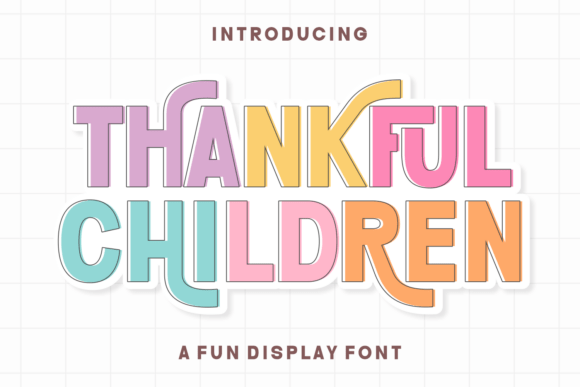
Thankful Children is characterized by its organic shapes and a distinct artistic style that mimics the free-spirited vitality of a child's world. Unlike rigid, geometric typefaces, this font features letters that appear ludic and unrestrained. The design prioritizes imagination over strict legibility standards, making it a decorative display font rather than a utility text. Each stroke is intended to look handcrafted, offering a personal touch that digital precision often lacks. When analyzing the font, one should look at the balance between its artistic flair and its functional readability, as this balance will dictate its suitability for various projects.
Primary Use Cases and Applications
The versatility of Thankful Children allows it to be deployed across a wide range of mediums. Its primary strength lies in branding for entities associated with youth and care. However, its utility extends into product design and educational materials.
Branding and Identity
For businesses and institutions, the font offers a way to immediately communicate a welcoming and playful environment. It is frequently considered for:
- Kindergartens and Daycare Centers: The font’s friendly demeanor can help ease the anxiety of separation for children and reassure parents of a nurturing atmosphere.
- Toy Stores and Baby Clothing Lines: It helps establish a brand identity that feels approachable and fun, distinguishing the brand in a competitive market.
- Children's Blogs or Media: Using the font for headers or logos can set a thematic tone that resonates with a family-oriented readership.
Product Packaging and Merchandise
Beyond corporate branding, the font breathes life into physical products. Its organic shapes make it a strong candidate for packaging design where shelf appeal is paramount. Designers often utilize it for snack wrappers, milk cartons, and birthday packaging to attract the attention of young consumers. Furthermore, the font translates well to merchandise such as t-shirt headings, coffee mugs, and wall decals, transforming everyday items into expressive accessories.
Educational and Decorative Materials
In educational settings, Thankful Children can be used to create engaging learning modules or informational posters. While it may not be suitable for body text, its striking charm works well for headings and titles, fostering a visual bond with younger students. It is also popular for personal projects like greeting cards, birthday invitations, and accessories like keychains, where a touch of artistic whimsy is desired.
Benefits and Tradeoffs
When evaluating Thankful Children, it is essential to weigh its aesthetic benefits against potential functional limitations.
Advantages
- Emotional Connection: The handcrafted nature of the font evokes nostalgia and warmth, which can be highly effective in marketing materials aimed at parents.
- Visual Uniqueness: It stands out from standard sans-serif or serif fonts, offering a distinct personality that can make a design memorable.
- Thematic Consistency: For projects strictly related to childhood, education, or play, the font provides immediate thematic alignment without the need for excessive supporting graphics.
Considerations
- Readability: As a decorative font, Thankful Children may present legibility challenges at smaller sizes or in long blocks of text. It is best reserved for headlines or short phrases.
- Context Appropriateness: The playful nature of the font may undermine the credibility of formal documents or serious business communications. It is not a "one-size-fits-all" solution.
- Audience Perception: While children respond to playful visuals, older audiences may perceive the font as immature if not balanced with more professional design elements.
Decision-Making Insights
To determine if Thankful Children is the right choice for your project, consider the following practical insights:
- Analyze the Target Audience: If your primary audience is children aged 2-10 or their parents, the font aligns well. If your audience includes corporate stakeholders or requires a high degree of formality, alternatives may be necessary.
- Assess the Medium: The font excels on physical products and large digital displays. Test its readability on mobile devices if you plan to use it for app interfaces or mobile websites.
- Evaluate the Message: Does your project aim to convey joy, creativity, and play? If so, Thankful Children is a strong candidate. If the goal is to convey authority, stability, or minimalism, other typefaces would be more appropriate.
Alternatives to Consider
While Thankful Children is a robust option, specific scenarios may call for different styles. If a more structured look is needed, a rounded sans-serif font might offer friendliness with better legibility. For projects requiring a vintage or retro feel, a different style of hand-lettering might be more suitable. It is often beneficial to pair the font with a clean, simple font for body text to ensure the overall design remains balanced and readable.
Conclusion
Thankful Children offers a unique blend of artistic flair and childlike innocence. It is a specialized tool designed to inject personality and warmth into branding, packaging, and educational materials. By carefully considering the context of your project, the expectations of your audience, and the functional requirements of your medium, you can effectively leverage this font to create designs that resonate with joy and creativity. Ultimately, the decision to use Thankful Children should be driven by a desire to connect with viewers on an emotional level, celebrating the unrestrained imagination that defines childhood.