Robyn: Inviting Wild Garden Elegance into Modern Design
In the search for typography that conveys authenticity and handcrafted charm, designers and creators often find themselves sifting through libraries of standard scripts. Robyn distinguishes itself by offering more than just letterforms; it provides a cohesive visual ecosystem. This premium botanical calligraphy font is engineered to blend the fluidity of classic script with the organic intricacy of hand-drawn flora. For professionals working on projects that require a delicate, artisanal touch, understanding the nuances of this typeface is essential for evaluating its fit within a specific creative workflow.
Anatomy of a Botanical Typeface
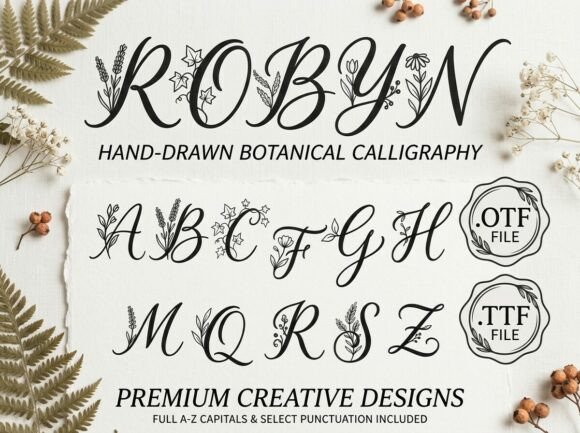
At its core, Robyn is defined by its rhythmic flow and sweeping strokes. However, what elevates it from a standard calligraphy font to a specialized asset is the integration of botanical elements directly into the letter structure. The typeface features characters uniquely entwined with illustrations of lavender, winding ivy, and dainty wildflowers. This design philosophy allows the text to function not just as a vessel for information, but as a central graphic element in a layout.
The quality of the linework is a critical factor in this font's utility. Because the floral details are drawn with intricate precision, the font maintains legibility even at larger display sizes. However, it is important to recognize the intended application. Robyn is not designed for body copy or long-form reading. Its strength lies in headlines, monograms, and short, impactful phrases where the artistic details can be fully appreciated without causing visual fatigue.
Practical Applications and Industry Use Cases
When evaluating a specialized font like Robyn, the primary consideration is context. It excels in specific niches where the visual language of nature, luxury, and femininity converge. Based on its structural characteristics, several industries stand to benefit significantly from incorporating this typeface into their toolkit.
Event Stationery and Wedding Design
The wedding industry relies heavily on typography that evokes romance and elegance. Robyn is particularly well-suited for bespoke wedding stationery, including invitations, save-the-dates, and menu cards. The integrated botanical elements reduce the need for additional clipart or overlays, streamlining the design process for stationery designers. For a "garden party" or "woodland" theme, this font serves as an immediate mood-setter.
Luxury Branding and Packaging
For small business owners in the apothecary, organic skincare, or artisanal food sectors, packaging is a primary point of contact with the customer. Using Robyn on labels and branding materials signals a commitment to natural ingredients and a hands-on approach to production. It works effectively for:
- Apothecary branding: Communicating heritage and herbal expertise.
- Organic skincare packaging: Highlighting purity and botanical origins.
- Personalized gift tags: Adding a high-end, custom feel to retail products.
Digital Content and Social Media
Bloggers and digital marketers focused on lifestyle, gardening, or DIY content can utilize Robyn to create visually distinct headers and graphics. On platforms like Pinterest or Instagram, where visual impact determines engagement, a font that combines text and illustration can capture attention more effectively than standard serif or sans-serif options.
Usability and Technical Considerations
While the aesthetic appeal of Robyn is high, a professional evaluation must address usability. The complexity of the floral entwinement means that readability can vary depending on the background and size. It performs best when used with high contrast—light text on dark backgrounds or vice versa. Crowded, textured backgrounds may obscure the delicate linework of the ivy and wildflowers.
Furthermore, kerning and spacing are vital. Because the script features sweeping tails and wide botanical swashes, designers must pay close attention to the spacing between letters. In some instances, manual adjustment may be required to ensure that the floral elements of one character do not collide awkwardly with the baseline or ascenders of the next. This is a common requirement for high-end script fonts and should be factored into the time budget for any project utilizing Robyn.
Flexibility and Long-Term Value
The long-term value of a font like Robyn depends on the user's portfolio diversity. For a designer who exclusively creates minimalist, corporate reports, this font may have limited utility. However, for freelancers and agencies that service the lifestyle, wedding, or artisanal markets, Robyn offers a distinct stylistic voice that can be reused across various client projects.
It is also worth noting the font's consistency. A well-designed botanical typeface ensures that the weight of the floral elements matches the weight of the letterforms. If the flowers are too heavy, the text becomes illegible; if too light, they disappear at smaller sizes. Robyn appears to balance this well, maintaining a cohesive visual weight that allows it to function as a unified design asset rather than a disjointed collection of letters and pictures.
Who Should Consider Robyn?
Determining whether Robyn fits your needs requires an honest assessment of your target audience and project goals. This typeface is an excellent addition for:
- Graphic Designers specializing in feminine branding or event stationery who need a "go-to" floral script.
- Small Business Owners in the handmade goods sector looking to elevate their packaging without hiring an illustrator for every label.
- Educators and Publishers creating materials for nature-related curricula or garden-themed activity books.
Conversely, if your primary audience expects stark modernism, industrial aesthetics, or highly technical readability, Robyn may not align with your brand identity. The decorative nature of the font makes it a specialized tool rather than a universal workhorse.
Conclusion
Robyn represents a specific intersection of calligraphy and illustration. It offers a practical solution for designers seeking to inject a sense of wild elegance into their work without the overhead of custom illustration. By understanding its technical requirements—specifically regarding spacing and background contrast—and applying it to appropriate use cases like luxury packaging and wedding stationery, creators can leverage this font to produce work that feels both bespoke and deeply connected to the natural world.