Dust Forge: Evaluating a Bold Typeface for High-Impact Design Projects
When searching for a typeface that delivers immediate visual impact and a distinct personality, designers often find themselves comparing a range of options. The goal is to find a font that not only stands out but also aligns with the specific mood and technical requirements of a project. In this evaluation, we take a close look at Dust Forge, a chunky display sans serif designed to bring a potent mix of retro energy and modern boldness to the table. This analysis will explore its characteristics, ideal applications, and how it fits into the broader landscape of display typography.
Understanding the Core Design and Aesthetic
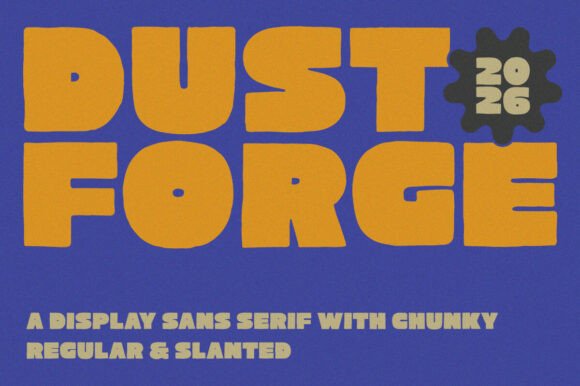
Dust Forge is built on a foundation of thick curves, soft corners, and heavyweight shapes. This combination results in a typeface that feels both powerful and approachable. Unlike geometric sans serifs that can appear cold or rigid, Dust Forge incorporates a subtle warmth and playfulness in its forms. The letterforms are designed to be instantly legible at large sizes, making them particularly effective for applications where quick visual recognition is paramount.
A key feature is its availability in both regular and slanted styles. The slanted variant is not a true italic but rather a dynamically tilted version of the regular weight. This allows designers to create visual hierarchy and a sense of motion or energy within a layout without switching to a completely different typeface. The "vintage twist" mentioned in its description comes from its rounded, confident forms that echo mid-century advertising and signage, yet it avoids feeling like a direct replica, maintaining a contemporary edge.
Primary Strengths and Best-Fit Applications
The primary strength of a typeface like Dust Forge lies in its ability to act as an instant eye-catcher. Its design is inherently loud, making it a strong candidate for contexts where the typography itself needs to convey a message of fun, energy, or nostalgia.
- Posters and Event Graphics: For concerts, festivals, or promotional events, Dust Forge can serve as the headline font, immediately setting a vibrant and engaging tone. Its chunky forms ensure readability from a distance.
- Food and Beverage Branding: The soft curves and bold attitude work well for brands targeting a youthful or playful market. Think craft soda labels, snack packaging, or burger joint menus where a retro vibe is part of the brand identity.
- Streetwear and Apparel: The font's bold presence aligns well with the graphic-heavy nature of streetwear design. It can be used effectively on t-shirts, hoodies, and caps to create statement pieces.
- Album Art and Music Branding: For genres like indie rock, pop-punk, or synthwave, Dust Forge can help create cover art that visually communicates the music's energetic or retro-futuristic sound.
- Loud Headline Design: In web design, advertising banners, or magazine covers, it can be used for short, impactful headlines where a standard sans serif would lack personality.
Navigating the Tradeoffs: When to Consider Alternatives
No typeface is universally perfect, and understanding the tradeoffs of Dust Forge is crucial for making an informed decision. Its greatest asset—its bold, decorative character—can also be its limitation in certain scenarios.
Readability in Body Text: This is a display font, optimized for large sizes. Its thick strokes and distinctive shapes would become cluttered and difficult to read if used for paragraphs or small, extended text. For body copy, pairing it with a highly legible, neutral sans serif or serif is essential.
Projects Requiring Subtlety or Formality: If the design brief calls for sophistication, minimalism, or corporate professionalism, Dust Forge's playful retro energy may feel out of place. In such cases, a more restrained geometric sans serif or a classic serif would be a more appropriate choice.
Comparison with Other Display Styles: It's helpful to consider where Dust Forge sits relative to other display font categories. Compared to a sharp, angular "stencil" or "industrial" display font, Dust Forge is softer and more organic. Against a highly detailed "script" or "handwritten" display font, it is more structured and assertive. Its specific niche is the "retro bold" or "fun heavyweight" category.
Practical Decision Factors for Designers
When evaluating whether to use Dust Forge, consider these practical questions:
- What is the primary message? Does the project need to communicate energy, nostalgia, fun, or boldness? If the answer is yes, Dust Forge is a contender. If it needs to communicate trust, elegance, or cutting-edge modernity, other options may serve better.
- What is the usage context? Will the font be used exclusively for headlines, logos, or short phrases? Or is there a risk it might be misapplied to smaller text? Ensure your team or client understands its intended use.
- How does it pair with other elements? Test Dust Forge with your planned color palette, imagery, and body copy font. Its retro vibe may clash with ultra-modern photography but harmonize perfectly with illustrated graphics or textured backgrounds.
- Are the styles sufficient? The two styles (regular and slanted) offer basic flexibility. For projects requiring multiple weights (light, medium, bold, black) or condensed/extended widths, you may need to look for a superfamily that includes a retro bold style among many others, or be prepared to use Dust Forge in a limited, accent role.
Integrating Dust Forge into a Broader Typographic System
A professional design rarely relies on a single typeface. Dust Forge is most effective when used as a component within a larger typographic system. Its role is typically that of the "display" or "headline" font, responsible for grabbing attention and establishing the initial tone.
The key to a successful integration is contrast and balance. Pair it with a neutral workhorse font for body text—such as a humanist sans serif like Open Sans or a transitional serif like Merriweather. This contrast ensures readability while allowing Dust Forge to perform its primary function of making a visual statement.
Consider the hierarchy. Use the regular style for the main headline and the slanted style for a sub-headline or a call-to-action to create dynamic emphasis. Avoid using it for every piece of text on the page, as this would overwhelm the viewer and dilute its impact.
Making Your Final Evaluation
Ultimately, choosing a display font like Dust Forge is a decision about brand alignment and emotional resonance. It is a tool designed for a specific job: injecting a burst of retro-inspired, bold energy into a design. It excels in projects targeting audiences who appreciate vintage aesthetics, playful branding, or high-energy visuals.
If your project goals align with these strengths, and you have a clear plan for its limited, focused use, Dust Forge can be a valuable addition to your design toolkit. However, if your needs are for versatility, extreme subtlety, or extended reading, it would be wise to explore more neutral or comprehensive typeface families. The best approach is to test it with your actual content and see if its unique personality enhances your message or distracts from it. By weighing these factors, you can move beyond simply choosing a font and make a strategic typographic decision.