Evaluating Asphalt Sports: A Typeface for High-Impact Visual Identity
In the competitive landscape of visual branding, typography is a foundational tool for communicating tone, energy, and purpose. Selecting a typeface is a critical decision that goes beyond mere aesthetics; it involves aligning a font's inherent characteristics with a brand's core message. For projects demanding a sense of power, speed, and modern authority, a specific category of typefaces is required. This evaluation examines Asphalt Sports, a high-performance condensed sans serif font, to determine its ideal applications, inherent strengths, and potential trade-offs.
Understanding the Core Design Philosophy
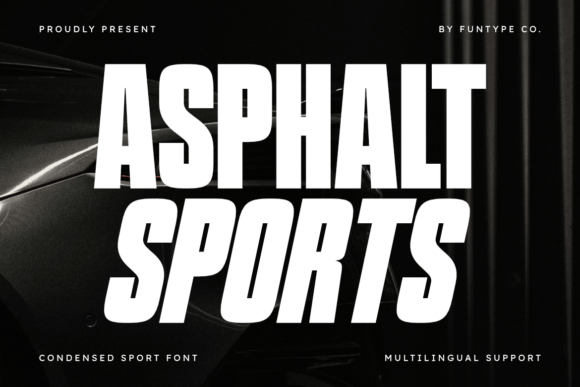
Asphalt Sports is engineered with a clear and specific objective: to capture the visual language of motorsports, industrial strength, and competitive athletics. Its design is not subtle. The font employs a solid structure and aggressive geometric angles, creating letterforms that feel stable, fast, and unyielding. This is a typeface that makes a statement before a single word is read. Its condensed nature allows for impactful headlines and titles that command attention within tight spatial constraints, a common requirement in logo design, apparel graphics, and event posters.
The inclusion of both Regular and Italic versions is a practical consideration for designers. This pairing allows for the creation of dynamic visual hierarchies. For instance, the Regular weight can establish a strong, grounded headline, while the Italic version can introduce a sense of motion, direction, or emphasis for key phrases or calls to action. This versatility is essential for creating sophisticated layouts that need to guide a viewer's eye effectively.
Comparing Typographic Categories: Where Asphalt Sports Fits
To appreciate Asphalt Sports, it helps to understand its place within the broader typographic ecosystem. It belongs to the family of condensed geometric sans serifs. This category is characterized by its efficiency of space, geometric construction, and a modern, often technical, feel. Compared to more traditional or humanist sans serifs, fonts like Asphalt Sports prioritize impact and clarity at a glance over nuanced readability in long-form text.
When evaluating alternatives, designers often consider several related categories:
- Ultra-Bold Grotesques: These are workhorse sans serifs known for their sheer weight and neutrality. While powerful, they may lack the specific aggressive geometry that gives Asphalt Sports its distinct motorsport character.
- Slab Serifs: Often used for a robust, industrial, or vintage feel. Slab serifs add decorative feet to letters, which can convey solidity but might introduce a different historical or editorial tone compared to the sleek, modern edge of a condensed sans serif.
- Display Typefaces: This is a broad category for fonts designed exclusively for headlines. Asphalt Sports fits here, but its geometric foundation gives it more structural integrity than purely decorative display fonts, making it more versatile for branding systems.
The key differentiator for Asphalt Sports is its specialized aesthetic. While a generic condensed sans serif might be suitable for a technical manual, Asphalt Sports is explicitly tuned to evoke the feeling of a starting grid, a finish line, or a high-stakes athletic event. This specificity is its greatest strength for the right project.
Practical Strengths and Inherent Trade-offs
Every design choice involves a balance of pros and cons. Understanding these helps in making an informed decision.
Strengths of Asphalt Sports
- Immediate Impact: Its bold, condensed form is impossible to ignore. It excels in environments where grabbing attention quickly is paramount, such as social media graphics, event banners, and product packaging.
- Thematic Clarity: The font instantly communicates a specific set of themes: speed, competition, power, and modernity. This can save significant design effort in establishing a brand's mood.
- Global Readiness: With Multilingual Support, Asphalt Sports is a practical choice for international brands or events, ensuring consistent identity across different languages and regions.
- Layout Efficiency: Its condensed width allows designers to set large, impactful text in limited horizontal space, which is valuable for responsive web design, app interfaces, and dense print layouts.
Trade-offs and Limitations
- Readability in Body Text: Like most condensed display typefaces, Asphalt Sports is not designed for extended reading. Using it for paragraphs or small caption text would likely hinder comprehension. Its role is for headlines, logos, and short, punchy phrases.
- Thematic Rigidity: Its strong stylistic identity can be a limitation. It may not be the right choice for a brand that needs to convey softness, tradition, luxury, or whimsy. The font's personality is powerful but specific.
- Context Dependency: The effectiveness of Asphalt Sports is highly dependent on its context. Paired with a neutral, highly readable body font and a considered color palette, it shines. Used inappropriately, it can feel out of place or overly aggressive.
Decision Factors: Is Asphalt Sports the Right Choice?
The decision to use Asphalt Sports should be based on a clear alignment between the font's character and the project's goals. Consider it a strong candidate for:
- Automotive and Motorsport Branding: From racing team logos and sponsor graphics to automotive aftermarket product lines, the font's DNA is a natural fit.
- Sports Team Identities and Merchandise: It can convey the energy and competitive spirit of athletic teams, particularly in sports like football, hockey, or extreme sports.
- Fitness and Performance Apparel: Logos, taglines, and graphics for brands focusing on strength, speed, and endurance can benefit from its assertive style.
- Event Promotions: Posters, tickets, and digital ads for races, competitions, or high-energy festivals.
- Tech and Innovation with an Edge: For brands in sectors like gaming, performance hardware, or cutting-edge engineering that want to project a dynamic, powerful image.
You may need to explore other options if your project requires:
- Long-form Editorial Content: For books, magazines, or articles where extended reading is the primary function, a humanist sans serif or serif typeface would be more appropriate.
- Classic or Timeless Branding: For heritage brands, luxury goods, or institutions aiming for a sense of tradition and elegance, a transitional serif or a more refined sans serif would be a better match.
- Playful or Youthful Aesthetics: Rounded, informal, or script-based typefaces would better serve brands targeting a younger audience with a friendly, approachable tone.
Conclusion: A Tool for Specific, High-Octane Projects
Asphalt Sports is not a universal solution, nor is it designed to be. It is a specialized tool in a designer's toolkit, engineered for a specific set of visual problems. Its value lies in its ability to deliver a powerful, cohesive message of speed, strength, and modern competition with immediate visual force. When used thoughtfully—paired with complementary typefaces and within a coherent design system—it can be the definitive element that elevates a brand's visual identity from merely present to genuinely impactful. The final choice hinges on a thorough evaluation of your project's core message, audience, and the specific emotional response you aim to evoke.